wlma

Author: Erin K.

  • Anne of Green Gables, Week 3

    Anne of Green Gables, Week 3

    Welcome to Week 3 of the Online Book Club discussion of Anne of Green Gables

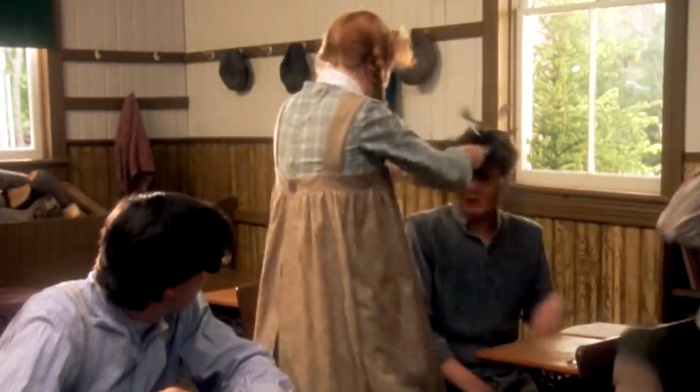
    In this section, we meet Gilbert Blythe and see Anne interact with him. Gilbert sure pushes her buttons immediately, doesn’t he? I love that he is so desperate for her to notice him the way other girls do, but when she finally does, he gets a lot more than he bargained for. Anne must have hit him pretty hard to break her slate on his head. Were you surprised that Gilbert wasn’t angrier? Or that Anne stayed mad for such a long time? 

    I have to confess that I didn’t really like Mr. Phillips, the teacher, at all in this section. I was shocked that to punish Anne for her spelling, he lifted up her marked up slate so all the other students could see, and I was really surprised that he punished only Anne for being late to class, even though a bunch of the boys were late, too. What did you think of Mr. Phillips in this section? Do you think you would have liked being his student? 

    I like all the old-fashioned details sprinkled throughout the story. At one point in chapter 15, Diana complains that one of the Pye girls put her milk bottle in Diana’s spot in the brook. It’s interesting that the children brought their own milk bottles to school, and especially that they kept them cool by leaving them in a brook. 

    One of the most famous events from this section is the tea party where Anne accidentally gets Diana drunk on currant wine. That whole scene is so sad. Anne wants so much to be grown-up and proper, but she makes so many unfortunate mistakes. If you’d like to experience how the raspberry cordial should have tasted, this recipe from the Mirlandra’s Kitchen blog should help.

    Anne’s been admiring puffed-sleeve dresses throughout the book, and she finally gets one at the end of this section. Matthew was so incredibly sweet to get it for her. Didn’t your heart just break for him as he was attempting to talk to the saleswoman about the dress? I was so glad that Rachel Lynde came through in the end. I’m also relieved Marilla let Anne keep the dress—I was a little afraid she would decide it was too frivolous.

    I was having a hard time imaging what these huge sleeves would look like, so I did a little research. Check out this article from the Historical Sewing blog if you want to see a whole bunch of pictures of dresses with huge sleeves. Make sure to leave a comment to tell me which style of sleeve is your favorite. Watch the video below if you’re interested to see how filmmakers interpreted the gown and Matthew’s interaction with the saleswoman. 

    What other parts of this section stood out to you? How did you feel about Anne walking across the rooftop? What did you think about the chapter when Marilla thought Anne lost her amethyst brooch? Did I miss any other scenes that you really enjoyed? Make sure you tell me in the comments section!

    I hope you’re able to read the rest of the book for next week. I’m excited to hear what you think. 
  • Anne of Green Gables, Week 2

    Anne of Green Gables, Week 2

    Welcome to Week 2 of the Online Book Club discussion of Anne of Green Gables

    How did you enjoy the first part of the book? I love all the descriptions of the landscape on Prince Edward Island, don’t you? I feel like it must be a magical land with blooming flowers everywhere, and I would love to visit. Check out the book The Landscapes of Anne of Green Gables to see more photos and drawings of the setting, or take a look at the Prince Edward Island Tourism site if the book is tempting you to visit the province where it takes place. 

    What were your first impressions of Anne and the Cuthbert siblings? Marilla is a prickly character, but you can tell that she has a soft heart buried beneath the surface. Matthew is so sweet and kind. I love how he just lets Anne talk at him. Anne is a hoot. I like reading about her, but I’m not sure if I would enjoy spending time with her. Her temper might be a little taxing. What do you think? Do you think you could be friends with any of the characters? 

    One of the most touching parts in this first section was where Anne was describing the imaginary friends she created at her first homes. At one home, she named her reflection Katie Maurice, and she called her echo Violetta at a second home. On one hand, it’s great that Anne had such an imagination that she was able to pretend these simple things were close friends. But it’s also sad that Anne was so lonely she needed these imaginings to fill a void for her. When I read this section as a child, it didn’t stand out to me, but now, as an adult, it made my heart feel heavy. Did it affect you this way?

    When I was researching L.M. Montgomery, I found a list of facts about her that said she created imaginary friends from her reflection too. The list has plenty of details about Montgomery when she was younger, if you’re interested. If you prefer a more formal biography, the University of Prince Edward Island has one, with some photos. 

    Do you have a mental picture of what each character looks like? If you’re struggling to imagine them, check out this site from the company that produced the 1985 movie and its sequels. It describes each character and the actor who portrayed them. I think I picture these actors in my head when I read the story, since I am most familiar with that adaptation. 

    What chapters stood out to you? Did you feel sorry for Anne when people made fun of her for wearing flowers in her hat to church? Did you cheer when Matthew took Anne under his wing and brought her sweets? Did you cringe when Rachel Lynde made fun of Anne’s looks? I’m really interested to hear what your favorite parts of this first section were.

    Before you go, check out the audition of Megan Follows, who portrayed Anne in the 1985 adaptation. I always enjoy seeing behind-the-scenes peeks at the movie-making process!

    I hope to hear from you in the comments section. Make sure you read through chapter 26 before joining us next week!

  • Anne of Green Gables, Week 1

    Anne of Green Gables, Week 1

    Welcome to June’s Online Book Club discussion! This month, we’re discussing Anne of Green Gables by L.M. Montgomery.

    The Online Book Club, if you’ve never joined us before, is a book discussion group that takes place entirely online. Each week, I write a new blog post that talks about different aspects of the book, and you can interact directly with me and other readers by leaving your comments. Check back each week and see what new topics we’re talking about.

    Anne of Green Gables is a heartwarming story about an orphan named Anne who finds an unlikely home with a set of siblings who never planned on raising a little girl. Matthew and Marilla Cuthbert sent away for a little boy who could help them with farm work, but there is a mix-up, and Anne arrives instead. Anne immediately makes a big impression with her flowery language and big imagination. I love this book so much, and I hope you do, too. Anne is such a great character, and she is lots of fun to read about.

    If you want to follow along with us, but you aren’t interested in reading the book, you can always watch one of the many Anne of Green Gables movie and television adaptations. I’m including the trailer of the Emmy- and Peabody-winning 1985 Anne of Green Gables adaptation above if you want to get a feel for the way the story plays out on screen. Feel free to still leave comments on the blog posts, even if you are only watching the series and not reading the book.

    Make sure to read the first 13 chapters before joining us next week. I’m excited to hear from you in the comments section.

  • Ready Player One, Week 4

    Ready Player One, Week 4

    Welcome to the final week of the Online Book Club discussion of Ready Player One.

    The ending was wild, wasn’t it? I was so confused by the beginning of this section. I didn’t understand why Wade would allow himself to get arrested, and I couldn’t guess how it was all going to come together. Once it did, I was blown away. What an ending!

    Did you imagine Wade would be able to escape from the IOI facility? I knew he was capable of lots of things when it came to technology, but I didn’t expect him to be able to hack into the system, steal footage that incriminated the Sixers, and then just waltz out. I was completely amazed. 

    How surprised were you by the reveal of who Aech really was? She was the most unexpected reveal because she was so different from her avatar. I wasn’t surprised that Art3mis had a physical characteristic that made her feel embarrassed because she alluded to that throughout the book. I was shocked that Aech was a girl.

    I loved that they all were able to work together to get to the Third Gate, and I thought it was a fun detail that Schoolhouse Rock! played a part in them being successful. I loved how Ogden Morrow was able to help them connect and play safely at the end.

    My heart completely dropped when they all died after they entered the Third Gate. What did you think when you read that line? Were you afraid they wouldn’t be able to finish the quest? It was so cool that the coin that Wade won from his perfect Pac-Man game gave him an extra life. I was glad it wasn’t a waste.

    Obviously, Wade knew enough about Monty Python and the Holy Grail to complete the mission. Are you familiar with the movie? Check out the trailer below to help familiarize yourself with the lines that Wade performed.

    What did you think of the final chapters? Do you think Wade will be responsible with his power in OASIS and all of his money? How would you continue the story? Apparently, a sequel is in the works. Not many details are known yet, but Cline does share a few sneak peeks in this article on Den of Geek.

    I hope you’ll let me know what your favorite parts of this section were. There was so much going on in these chapters. I couldn’t cover everything. If you really enjoyed the book, check out this list I made of other books and movies you might enjoy. You might even find some of James Halliday’s favorites on this list.

    Thanks for reading along with us this month. Next month, we’re reading a classic, Anne of Green Gables. I hope you’ll join us again next month.

  • Ready Player One, Week 3

    Ready Player One, Week 3

    Welcome to Week 3 of the Online Book Club discussion of Ready Player One.

    How did this section treat you? Are you still enjoying this universe? 

    Two of the most amazing things in this section were the descriptions of Wade’s apartment and his gaming bodysuit. Could you believe all the high-tech things that Wade had going on in his apartment? The WarDoor, X-ray machines that examined all food and packages, and all the OASIS gear were incredible. His suit was wild. Could you believe that it allowed him to feel the things he was experiencing in OASIS? I couldn’t imagine it all. Max, the virtual personal assistant, was interesting as well. 

    What did you think of Wade’s daily schedule? I thought it was pretty clever that he motivated himself to exercise by tying his exercise requirements to his OASIS account. I still have a really hard time imagining that he never talked to another person or got fresh air, but at least he was more active. 

    Art3mis and Wade make more of a connection in this section. Were you surprised that she wanted to stop interacting with Wade? How do you think their relationship together will continue? Do you think Wade needs her to get the egg? 

    Why do you think there was that whole section about the perfect Pac-Man game that Wade played? I thought for sure that he was going to figure out something about the Jade Key through that game, but he didn’t. He didn’t find out anything about the key until Aech messaged him. 

    Could you believe the Sixers killed Daito? That section was incredibly sad. I feel like it was needed, because it pushed Wade to continue on with the quest. He had been stagnating, but by the end of the section, he was motivated again. 

    Wade had to play through the game Black Tiger to defeat the Second Gate. I had never even heard of that game before reading this section. If you’re interested in reading a review of the game from when it came out and seeing pictures of the graphics, check out this 1989 article from Computer and Video Games Magazine. I really enjoyed the fact that Wade had to enter the game, and I thought it was awesome that he got a giant robot as a prize. It will be interesting to see how the robot comes back into the story. 

    If you’re interested to see how Steven Spielberg and his team created all the OASIS special effects for the movie version of Ready Player One, check out this article. It’s really interesting and has a few cool video clips that explain the process. 

    I hope you enjoyed this section, and I hope you’ll leave me a comment about any interesting parts that I didn’t have space to mention. Make sure to finish the book before you join us next week!

  • Ready Player One, Week 2

    Ready Player One, Week 2

    Welcome to Week 2 of our Online Book Club discussion of Ready Player One!

    Did you absolutely love this section? I was totally sucked into the action and adventure from the very first chapter. How about you? I didn’t think that I was going to enjoy the book so much from the very beginning. 

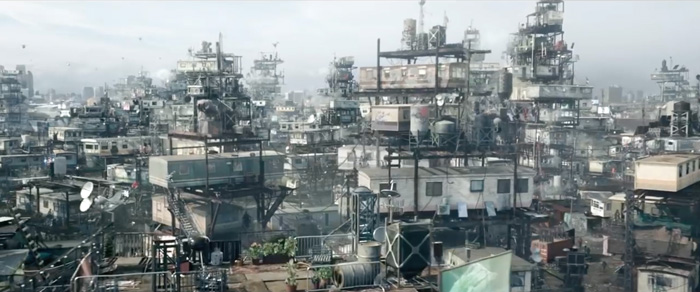
    Some of the most striking things to me about Wade’s world were the Stacks. I couldn’t imagine what that would actually look like. It seemed incredibly dangerous and precarious. I can understand them as a space-saving measure, but not for anything else. What did you think of the Stacks? Would you be brave enough to climb to the top of one? 

    I also found it hard to get my head around the fact that Wade didn’t interact with the outside world really at all. It took me a little while to really understand that he stayed in his hideout and didn’t go outside or interact with people outside of OASIS. I know that OASIS is realistic, but still, I can’t imagine not getting fresh air or moving around. Don’t you think people would get headaches or feel sick in some way after spending so much time in a virtual world? 

    How shocked were you that Wade was the first to figure out the first clue? Were you surprised by the challenge he had to undertake to get the Copper Key? I thought his challenge of playing Joust with that creature, Acererak, was really interesting, but his challenge to defeat the first gate was really, really cool. The recreation of Halliday’s childhood bedroom was awesome, and the fact that Wade had to reenact WarGames was so unexpected. Having the challengers reenact a movie ensured that they had incredible knowledge of the things Halliday loved. If you want to get up to speed with Wade, make sure to check out a copy of WarGames from the library, and check out the above movie trailer to get a better idea of the challenge that Wade undertook. 

    What do you think of Art3mis? Do you think she and Wade will have to work together? How do you think Aech will figure into the whole challenge? What do you think Art3mis and Aech are like in real life? 

    This section ends with the Sixers threatening Wade and blowing up his house. Then, Wade moves to Columbus and vows to find the egg. What do you think is going to happen next? How will he outsmart the Sixers? How will Wade change now that he has money and notoriety? 

    If you were confused by all the pop culture and gaming references in the book, you might want follow Wade and Aech and start reading back issues of Starlog magazine. You should probably try some Dungeons & Dragons, too. 

    I hope you enjoyed this section. So many things happened that I couldn’t discuss them all. What was a part that you enjoyed that I didn’t mention? Make sure to let me know in the comments section. And, make sure to read Level 2, chapters 17–28, before joining us next week. 

    I can’t wait to hear from you!

  • Ready Player One, Week 1

    Ready Player One, Week 1

    Welcome to May’s Online Book Club discussion! This month, we’re discussing Ready Player One by Ernest Cline. 

    The Online Book Club, if you’ve never joined us before, is a book discussion group that takes place entirely online. Each week, I write a new blog post that talks about different aspects of the book, and you can interact directly with me and other readers by leaving your comments. Check back each week and see what new topics we’re talking about.

    Ready Player One is a fascinating story that combines pop culture and video game references from the 1980’s with thrilling, action-packed situations set in a futuristic society. In 2045, Wade Watts lives in an America that has access to something called the OASIS, a virtual world where most people spend most of their time. When James Halliday, the creator of the OASIS, dies, his will reveals that he has created a contest in the virtual world, and whoever solves the clues first will win Halliday’s vast fortune and complete control of the OASIS. Even though he’s just a teenager, Wade cracks the first clue. Soon, he’s on a thrilling adventure in which his rivals are willing to kill to find out what he knows.

    If you want to follow along with us, but you aren’t interested in reading the book, you can always watch the 2018 movie, Ready Player One, directed by Steven Spielberg. Check out the above trailer if you’re curious to find out more, and feel free to still leave comments on the blog posts, even if you are only watching the series and not reading the book.

    Make sure to read the introduction and Level One, the first 16 chapters, before joining us next week. I’m excited to hear from you in the comments section!

  • Home Fires, Week 4

    Home Fires, Week 4

    Welcome to the last Online Book Club discussion of Home Fires!

    Are you tired after reading about all the hard work people did during the war? I felt physically exhausted after reading each chapter, even though I didn’t actually do anything! The amount of work that the women did was incredible, and doing it so willingly was amazing. These women were definitely special. 

    One of the first things that stood out to me in this section was how the Red Cross committed to send each prisoner of war a box of comforting items once a week. That must have been an incredible undertaking. I don’t even know how to coordinate that kind of effort. Women knitted items and donated money to help send food and supplies. They also collected craft materials and other odds and ends to help POWs occupy their minds during the long days. I was surprised they were allowed to send those kinds of materials—I don’t think I had ever heard of that before. If you want to know more, check out this article.

    What did you think about the clothes rationing mentioned in this section? I can’t imagine how everyone kept all the coupons straight. Can you imagine having to plan for a whole year when contemplating a purchase? Do you think you would be good at mending and making do? I don’t think I would be—especially at making do with rationed bath towels. What do you think would be the hardest thing to do without? The Imperial War Museum discusses clothing policies and shows some wardrobe propaganda posters, coupon booklets, and utility outfits. 

    Did you catch the part that talked about the fact that women tried to use dog fur as wool? I have a hard time imagining socks made of dog fur would be quite the same as socks made of sheep’s wool. I’m sure that these women still made great things with the dog’s “wool.” If making things out of pet hair sounds interesting to you, check out Crafting With Cat Hair. Send me a picture if you make something cool! 

    I was glad to read that the women did have some fun through music and plays and competitions. I liked reading about their competitions for “funniest potato” or “the most inventive buttonhole.” What did you think of their competitions and prizes? 

    The section about the questionnaires women filled out about their needs for their homes was so telling. The women didn’t really want anything special, just knobs and windows that were easy to clean and spaces to dry their clothes when it was wet outside. I think there is some correlation between their simple desires for their homes and their abilities to adapt and persevere through the war. The fact that they wanted for so little shows why they were able to ration and think creatively and contribute to the war effort. What did you think of the answers the women provided in the questionnaires? 

    Were there any other parts of this last section that particularly stood out to you? Did you appreciate that the author included a chapter that told what happened to the women mentioned after the war? Did you wish you had learned more about the women and less about the things they did? 

    If you enjoyed Julie Summer’s writing style, check out her website. And, if you liked the subject of this book and want to read or watch more things like it, check out this list of similar titles I created. Please let me know if you check out anything on the list. 

    I hope you liked the book. Next month, we’re reading Ready Player One. I hope you’ll join us!

  • Home Fires, Week 3

    Home Fires, Week 3

    Welcome to Week 3 of the Online Book Club discussion of Home Fires

    Much of this section centered on rationing. Wasn’t it interesting to read about all the restrictions and things people did to grow more food? I enjoyed reading how people were so creative and industrious. I thought it was interesting that the rationing was the same for everyone regardless of social status or job. That probably helped to reduce tension because everyone was affected, not just the poor or the working class. The potato concoctions people were able to create surprised me, and I was shocked that people were so desperate to grow onions. I wouldn’t think onions would be so important, but I can understand that they added a lot of flavor to otherwise bland dishes. 

    What did you think about the sections about pig slaughtering? All of the rules about how many pigs one could slaughter and when were a little confusing to me. I enjoyed the anecdote about the family that hid hams in bed with the wife so they wouldn’t get in trouble with the Ministry of Food. What did you think of some of the pork recipes, especially the black pudding made from half of a pig’s head? I love the idea of using every part of an animal, but I don’t know if I would be brave enough to actually do it!

    The Rural District Pie Scheme really intrigued me. Did you notice that one woman had to deliver 600 pies on her bicycle? That would be quite a trick! Hopefully, she had a big cart, so she didn’t have to make 100 trips. Check out this blog post if you’re interested to see some recipes for pies from 1938. Maybe some of these recipes were used by the people mentioned in the book! 

    Throughout this section, the villagers collected things to aid in the war effort. Collecting herbs for medicines made sense to me, but I was surprised by the need for animal bones. I had never heard that fats from the bones could be used in explosives or grease for guns. Did you notice that they also collected rags, paper, and insulation material? Does hearing about all the things they collected make you think about how much we waste? 

    The last chapter in this section focuses on jam. Preserving fruit was a great way to keep it fresh and usable throughout the year, and give people calories they needed. The Women’s Institute gives some jam recipes you can try. Also, check out these posters from World War II that encouraged women to can and preserve. The artwork is pretty cool! 

    If you’re having a hard time imagining daily life during the 1940’s, watch the above clip about a modern woman who is living as if she were still in the 1940s. This video shows another British citizen who is doing the same thing. Do you think you could live like these two people? Do you think you could forgo modern conveniences?

    If you’re really intrigued by the idea of modern people living as if they were in the past, check out 1940s House, a British reality show that completely immerses a family in a World War II household. This series ties in really well with Home Fires. It even talks about raising rabbits for meat, just like this section did!

    What other parts of this section really stood out to you? Were you amazed by the abilities of the women? Do you think you could do all the work that the women did? Please make sure to let me know what you thought of this section by leaving a comment in the comments section. 

    I hope you’re able to finish the book for next week’s discussion. I can’t wait to hear what you thought.

  • Home Fires, Week 2

    Home Fires, Week 2

    Welcome to Week 2 of the Online Book Club discussion of Home Fires by Julie Summers. 

    How did you like the first chapters of the book? Are you enjoying learning all the facts about the Women’s Institute? I’m enjoying learning the facts, but I wish there were more of a narrative so I could follow the story of just one or two main characters. I am having a hard time keeping up with the names of all the characters!

    The first couple pages mentioned the song “Jerusalem.” I had never heard of that song, and it seemed important to the women, so I decided to do a little research. The Conversation UK describes the history of the song and provides a video from Prince William and Kate Middleton’s wedding, where it was one of the hymns. 

    I enjoyed some of the historical information shared in the first chapters. I thought it was so interesting to read some of the diary entries and see how the women shared information about the war so casually in their entries. For example, at the end of the second chapter, Edith Jones wrote, “[B]ombs fell on Chelmick [7 miles away] on Monday 7th. White washed the pantry.” I couldn’t believe how she wrote about bombs falling, something that I would have a really hard time getting over, but then also shared that she was able to keep up with regular life and just whitewash her pantry. In another passage (in the first chapter of the book, but near the end of the war), she recounted her time at her Women’s Institute meeting and wrote that Rome was captured in the next sentence. It astounds me that these women were so brave and could almost take the war in stride.

    The book noted that some of the women were participating in Mass Observation, a social research organization that used volunteers to record everyday life through diaries, questionnaires, and observations. The organization shut down in the 1960s, but it relaunched in 1981. Today it has a website and a podcast. I really enjoyed these historical documents that give information about air raids and how they affected children. 

    Later on in the section, I was shocked to read that one of the Women’s Institute librarians burned books she thought were objectionable to young girls. Did you catch that? Do you think something like that would work in today’s culture?

    I really enjoyed reading about the Women’s Institute meetings, didn’t you? The women did so many great things in their meetings, and the topics they discussed were so interesting. They knitted blankets, grew food, made garments for the Red Cross, and learned so many interesting things. I loved how the meetings brought different types of women together and helped them overcome their differences. I thought it was interesting that one woman commented that they made just two changes to the meeting schedule of events once the war started. They canceled the September meeting so they could go blackberry picking, and they added time in each meeting to talk about “kitchen front questions.” I’m sure the women had to make so many kitchen changes due to the rationing, so I’m sure this “kitchen front” time was especially worthwhile. 

    This section ends with a chapter about evacuees and the differences between mothers in the country and mothers in the city. What did you think of this chapter? Didn’t you feel so sad for the little kids who were forced to pack up their whole lives and adjust to a completely new way of life? 

    There are so many other interesting historical details that I didn’t mention. What are some details that stood out to you? Did you learn any new information about the war as you were reading? I’m really interested to hear what information was most interesting to you, so please make sure to leave a comment. 

    I hope you’ll join us next week as we read chapters 4-6. I hope to hear from you in the comments!